This is Berlin Culture Crawl's last post. Thanks to all who stopped by!
Oct 7, 2011


Jun 22, 2011
Catch the Piano Fever
The Kulturforum comes alive with Klavierfieber, a week-long festival linking art works in the Neue Nationalgalerie, the Alte Nationalgalerie, the Pergamonmuseum and the Neues Museum with compositions for the piano inspired by them. Klavierfieber brings together six works of art, six young composers and six international pianists.
The concept is a novel one: the link between art and music is not intended to be merely decorative. Six composers were commissioned to create pieces for the piano, taking their inspiration directly from a painting or sculpture. The results are intriguing: Jens Joneleit (his opera Metanoia was premiered at the Staatsoper's opening at the Schiller Theater last year) created Schnitt ("Cuts"), using a Dada-ist composition form inspired by Hannah Höchs's Dada Collage; and the Danish-German composer Nils Eichberg presents his Nefertiti, to be performed by the brilliant 20-something Russian pianist Denis Kozhukin, who is making waves at all the top European competitions.
Compared to the large music/art festivals with long traditions in Berlin -- the Tanz im August, the Musikfest in September, the Art Forum in October, the Jazzfest in November -- Klavierfieber is diminutive: six evening and lunch/teatime concerts, six pianists, composers and works of art. But it has a special significance for Berlin cultural life. If the Klavierfieber proves infectious, it will rejuvenate the Kulturforum.
Klavierfieber is supported by the Prussian Cultural Heritage Foundation and Young Euro Classic. It takes place between Monday, June 20, and Sunday, June 26 in the Kulturforum -- in the museums as well as in the Staatsbibliothek (State Library) and the St Matthäuskirche (St. Matthew's Church).
The English page of the festival web site is here.
Jun 18, 2011
Taking Classical Music outside the Concert Hall (2)
The building opposite the Schlossplatz in which you find one of Berlin's premier music conservatories, the Hochschule für Musik Hanns Eisler, once housed the royal stables. The exterior is neo-baroque, the interior sleekly modern. In the Galakutschensaal (literally, the carriage hall) you can hear wonderful music for free.
 The conservatory has a rich program of events all through the year: concerts, master classes, lecture concerts, workshops, international music contests -- and the standard is always high. There is a closer, more intimate relationship between the performers and audience than in the concert hall. I like sneaking in well before the concerts or master classes begin. The spacious quietness in the room -- soaring ceilings, parquet floors, two black Bösendorfer grand pianos. tall windows letting in a view of the Dom, the Spree and the green quadrant of the Schlossplatz -- is a first intimation of the purity of sound that will follow.
You can check Hanns Eisler's concert schedule here. The Hanns Eisler and the Universität der Künste have teamed up to form the Jazz-Institut Berlin on the Einsteinufer, and some great free concerts are on offer at this location, too. The Jazz-Institut's program is available here.
 An unusual series outside the concert hall takes place in the Bröhan-Museum in Charlottenburg. In Berlin's museum for Art Nouveau decorative arts, music students give concerts on the first Thursday of every month. In their interaction with the audience, musicians make imaginative connections between the 30-minute program and a selected museum piece. The next concert is on Thursday, July 7, at 14:00. Tickets (which includes entrance to the museum) are 4 EUR.
My last tip for this post is the "Jour Fixe" free concert series at the Musikinstrumenten Museum (or the MIM) every other Wednesday afternoon. Once again, the performers are from Berlin's music conservatories. Originally, the program was reserved exclusively for the piano; now it includes a broad spectrum of solo and chamber music.
The concerts begin at 15:30, but this is a very popular little series for those "in the know." So get there at 14:30 to pick up your ticket, then wander around the museum (or find something interesting to do around Potsdamer Platz) till doors to the music auditorium open. The next "Jour Fixe" is on Wednesday, June 29. Check MIM's concert calendar here.

You can check Hanns Eisler's concert schedule here. The Hanns Eisler and the Universität der Künste have teamed up to form the Jazz-Institut Berlin on the Einsteinufer, and some great free concerts are on offer at this location, too. The Jazz-Institut's program is available here.

My last tip for this post is the "Jour Fixe" free concert series at the Musikinstrumenten Museum (or the MIM) every other Wednesday afternoon. Once again, the performers are from Berlin's music conservatories. Originally, the program was reserved exclusively for the piano; now it includes a broad spectrum of solo and chamber music.
The concerts begin at 15:30, but this is a very popular little series for those "in the know." So get there at 14:30 to pick up your ticket, then wander around the museum (or find something interesting to do around Potsdamer Platz) till doors to the music auditorium open. The next "Jour Fixe" is on Wednesday, June 29. Check MIM's concert calendar here.
May 14, 2011
Taking Classical Music Outside the Concert Hall
You can ditch the jacket and tie, the black dress and string of pearls, for these great low-key concerts that take place outside the concert halls or during lunch hours.
To begin with, there are noontime concerts presented by leading Berlin orchestras such as the free Lunch Concerts at the Berlin Philharmonie. Judging by swelling audience numbers, the Philharmonie's Lunch Concerts are no longer a well-kept secret -- a favorite with tourists, office workers on breaks and visitors to the Kulturforum. Every Tuesday at 13:00, you can stop by to hear soloists of the Berliner Philharmoniker in a 30-40 minute chamber music concert. The mini-concerts also feature soloists from the Deutsche Symphonie Orchester (DSO) and the Staatskapelle Berlin or conservatory students. Seats go fast, but you can find stairs and coat-check counters on which to sit, or look out over the foyer from the first floor. There's a fine lunch to go with the music, but unlike the arts the lunch is not for free.
The fourth floor of the Maison de France on Kurfürstendamm is the venue for the DSO's own lunchtime series. La Bonne Heure takes place every first and third Wednesday of the month, beginning at 12:45. The program, featuring mostly French chamber music, runs about 45 minutes and is accompanied by French catering in a wonderfully retro 1950-s bar and a view over Ku'damm. Taking your seat at La Bonne Heure is like taking a deep breath in the midst of a busy day.
Another series to watch out for: the Espresso Concerts at the Konzerthaus on Gendarmenmarkt, beginning in the 2011-12 season. Sebastian Nordmann, who recently took over as director, has given programming at the Konzerthaus an overhaul, letting in a fresh breeze. The 2011-12 season, called "Open", aims to bring the public into the Konzerthaus throughout the day instead of only during evening performance hours, and the Espresso Konzerte are one of these open invitations. These 45-minute midday concerts will take place on the last Wednesday of each month at 14:00. The ticket price includes an espresso -- a welcome freebie for those who have to return to the office, library or practice room.
There's lots more: concerts in museums, studios and music conservatories. So stay tuned.
The next Lunch Concert is on Tuesday, May 17. Entrance is free. The program is usually announced shortly before the concert. This series runs till June 28, 2011. For more information see the Berlin Philharmonic's website.
The next La Bonne Heure is on Wednesday, May 18. The Masion de France is on Kurfürstendamm 211. Tickets are 6 EUR and you should make a reservation. For more information see the DSO's website.
The Espresso Konzerte series begins in the 2011-12 season. For dates, check the Konzerthaus website, the season brochure, or the monthly program calendar available at the concert hall. The program is advertised only shortly before the concert. The concert location is revealed only after you get your ticket. The concerts move from month to month between the smaller halls within the Konzerthaus.
To begin with, there are noontime concerts presented by leading Berlin orchestras such as the free Lunch Concerts at the Berlin Philharmonie. Judging by swelling audience numbers, the Philharmonie's Lunch Concerts are no longer a well-kept secret -- a favorite with tourists, office workers on breaks and visitors to the Kulturforum. Every Tuesday at 13:00, you can stop by to hear soloists of the Berliner Philharmoniker in a 30-40 minute chamber music concert. The mini-concerts also feature soloists from the Deutsche Symphonie Orchester (DSO) and the Staatskapelle Berlin or conservatory students. Seats go fast, but you can find stairs and coat-check counters on which to sit, or look out over the foyer from the first floor. There's a fine lunch to go with the music, but unlike the arts the lunch is not for free.
The fourth floor of the Maison de France on Kurfürstendamm is the venue for the DSO's own lunchtime series. La Bonne Heure takes place every first and third Wednesday of the month, beginning at 12:45. The program, featuring mostly French chamber music, runs about 45 minutes and is accompanied by French catering in a wonderfully retro 1950-s bar and a view over Ku'damm. Taking your seat at La Bonne Heure is like taking a deep breath in the midst of a busy day.
Another series to watch out for: the Espresso Concerts at the Konzerthaus on Gendarmenmarkt, beginning in the 2011-12 season. Sebastian Nordmann, who recently took over as director, has given programming at the Konzerthaus an overhaul, letting in a fresh breeze. The 2011-12 season, called "Open", aims to bring the public into the Konzerthaus throughout the day instead of only during evening performance hours, and the Espresso Konzerte are one of these open invitations. These 45-minute midday concerts will take place on the last Wednesday of each month at 14:00. The ticket price includes an espresso -- a welcome freebie for those who have to return to the office, library or practice room.
 |
| Sol Gabetta, artist-in-residence at the Konzerthaus next season. Photo: copyright, Marco Borggreve: with kind permission of the Konzerthaus Berlin |
There's lots more: concerts in museums, studios and music conservatories. So stay tuned.
The next Lunch Concert is on Tuesday, May 17. Entrance is free. The program is usually announced shortly before the concert. This series runs till June 28, 2011. For more information see the Berlin Philharmonic's website.
The next La Bonne Heure is on Wednesday, May 18. The Masion de France is on Kurfürstendamm 211. Tickets are 6 EUR and you should make a reservation. For more information see the DSO's website.
The Espresso Konzerte series begins in the 2011-12 season. For dates, check the Konzerthaus website, the season brochure, or the monthly program calendar available at the concert hall. The program is advertised only shortly before the concert. The concert location is revealed only after you get your ticket. The concerts move from month to month between the smaller halls within the Konzerthaus.
Mar 6, 2011
Potsdam 2011: Celebrating the Silver Screen
On 12 February 1912, the sound of the clapperboard rang for the first time through the Glasatelier (glass-roofed studio) -- Europe's oldest film studio at Babelsberg in Potsdam. Asta Nielsen, Europe's first leading lady, stepped forward for the first take of the (now lost) silent film Der Totentanz. This year, Potsdam celebrates that historic moment by declaring 2011 the Year of Film.
But wait a moment, you say, sharpening your keen powers of observation. Shouldn't the Year of Film then be 2012?
Ah, yes. Except that Potsdam is already gearing up for a huge celebration in 2012 -- the 300th birthday of Frederick II, Emperor of Prussia -- and two momentous occasions may be one too many. Besides, the foundation stone of the Babelsberg studios on the site of what was once a spinning and weaving factory, was actually laid in November 1911 -- thus giving Potsdam a reason to move up the celebration date.
Bärbel Dalichow, head of Potsdam's Film Museum, is delighted that the city can finally draw attention to the star role it has played in European film history. "We are proud to look back on a 100-year history of moving pictures that have moved audiences everywhere," she says.
Babelsberg: the German Dream Factory
No other film studio is so bound up with a country's turbulent history -- cinematic, social, cultural and political. Babelsberg survived a monarchy, the Weimar Republic, the Nazi era and the Communist regime of the German Democratic Republic (GDR). Fritz Lang's monumental silent movie Metropolis was filmed here, as was Leni Riefenstahl's propagandist Triumph des Willens or Triumph of the Will (commissioned by Hitler), and Josef von Sternberg's Der Blaue Engel (The Blue Angel), starring Marlene Dietrich. The role of Lola-Lola rocketed Dietrich to international fame and a contract with Paramount Pictures.
 From the end of the war till German reunification, Babelsberg was the GDR's film studio, the Deutsche Film AG -- or DEFA, as people still refer to it. During this time the prolific DEFA produced no fewer than 1,240 TV and feature films, including Jakob der Lügner (Jacob the Liar), the only GDR film nominated for an Oscar.
Since 2007, some of the big-name blockbusters have been filmed here: Stephen Daldry's The Reader, Quentin Tarantino's Inglorious Bastards, Roman Polanski's The Ghost Writer, and Roland Emmerich's Anonymous are just a few.
Potsdam 2011: the City of Film
One of the highlights of the year-long celebration is the "Agentennacht" (Night of the Secret Agents) on May 14. The studio, using special effects, recreates history on the Glienicker Brücke (also known as the Bridge of Spies) where US-occupied West Berlin exchanged captured spies with Soviet-occupied Potsdam during the Cold War.
May 21 is Open Day at the Babelsberg campus, where you can explore behind the scenes at all 16 studios, watch 3.000 film crew members at work, and gawk at elaborate props and collection of 250.000 costumes.
Get a unique perspective on Silver Screen history by joining one of Babelsberg's quirky walking tours. Between 16 April and 16 October, the 3-hour tour "Film Stars, Political Borders and the Stalin Villa" takes you into several fascinating homes and buildings connected with political and film history, including the residences of Truman, Churchill and Stalin during the Potsdam Conference (1945).
For more information on the 2011 Potsdam: Jahr des Films events, check their website.
But wait a moment, you say, sharpening your keen powers of observation. Shouldn't the Year of Film then be 2012?
Ah, yes. Except that Potsdam is already gearing up for a huge celebration in 2012 -- the 300th birthday of Frederick II, Emperor of Prussia -- and two momentous occasions may be one too many. Besides, the foundation stone of the Babelsberg studios on the site of what was once a spinning and weaving factory, was actually laid in November 1911 -- thus giving Potsdam a reason to move up the celebration date.
 |
| Asta Nielsen in her Berlin apartment Photo: Wikimedia Commons |
Babelsberg: the German Dream Factory
No other film studio is so bound up with a country's turbulent history -- cinematic, social, cultural and political. Babelsberg survived a monarchy, the Weimar Republic, the Nazi era and the Communist regime of the German Democratic Republic (GDR). Fritz Lang's monumental silent movie Metropolis was filmed here, as was Leni Riefenstahl's propagandist Triumph des Willens or Triumph of the Will (commissioned by Hitler), and Josef von Sternberg's Der Blaue Engel (The Blue Angel), starring Marlene Dietrich. The role of Lola-Lola rocketed Dietrich to international fame and a contract with Paramount Pictures.

Since 2007, some of the big-name blockbusters have been filmed here: Stephen Daldry's The Reader, Quentin Tarantino's Inglorious Bastards, Roman Polanski's The Ghost Writer, and Roland Emmerich's Anonymous are just a few.
Potsdam 2011: the City of Film
One of the highlights of the year-long celebration is the "Agentennacht" (Night of the Secret Agents) on May 14. The studio, using special effects, recreates history on the Glienicker Brücke (also known as the Bridge of Spies) where US-occupied West Berlin exchanged captured spies with Soviet-occupied Potsdam during the Cold War.
May 21 is Open Day at the Babelsberg campus, where you can explore behind the scenes at all 16 studios, watch 3.000 film crew members at work, and gawk at elaborate props and collection of 250.000 costumes.
Get a unique perspective on Silver Screen history by joining one of Babelsberg's quirky walking tours. Between 16 April and 16 October, the 3-hour tour "Film Stars, Political Borders and the Stalin Villa" takes you into several fascinating homes and buildings connected with political and film history, including the residences of Truman, Churchill and Stalin during the Potsdam Conference (1945).
For more information on the 2011 Potsdam: Jahr des Films events, check their website.
Feb 13, 2011
C for Currywurst, E for Exportweltmeister
Twenty-five million apple-cheeked garden gnomes grace our front yards; 95,000 new titles appear every year in our bookstores; 130 professional orchestras perform in our concert halls; and over 300 theaters are open every night for a stage production. Who knew?
You would, if you had stopped in at the small exhibition called "Deutschland für Anfänger" (Germany for Beginnners) at the Forum Willy Brandt on Unter den Linden. Arranged in a sequence that runs through 26 concepts, each representing a single letter in the alphabet, the exhibition is a romp through German history and culture -- informative (but never dry), imaginative, playful and interactive. Instead of shying away from cliches it presents them tongue-in-cheek.
You'll learn the story behind Berlin's favorite fast food, the curry wurst, and discover why German soccer was never the same after the 1966 World Cup game in England's Wembley stadium. You can hear our eight principle dialects and hum along to versions of the Loreley legend in popular music. You can test your knowledge of the ten German winners of the Nobel Prize and watch archived material from the 1960s and 70s on the daily television news show, the Tagesschau.
Visitors to Berlin will enjoy this exhibition -- it's easily combined with a shopping spree on Unter den Linden, and convenient to reach as the S-Bahn Brandenburger Tor is at its doorstep -- but I guarantee that even long-time residents will be surprised by what they can discover by popping in. I bet they couldn't tell you where the first garden gnomes appeared, for instance (Thüringia, in 1872), and why. Drop in and find out!
"Deutschland für Anfänger" is at the Forum Willy Brandt, Unter den Linden 62-68, and runs till 27 February 2011. The exhibition is open from Tuesday to Sunday, 10 am to 6 pm, and entrance is free. Getting there: The Forum is located at the S Brandenburger Tor's exit on Unter den Linden.
The exhibition is organized by the Goethe Institut and the bpb (Bundeszentrale für politische Bildung). In addition to the exhibition, there is an excellent documentary film on Willy Brandt, former German Chancellor, for whom the Forum is named.
You would, if you had stopped in at the small exhibition called "Deutschland für Anfänger" (Germany for Beginnners) at the Forum Willy Brandt on Unter den Linden. Arranged in a sequence that runs through 26 concepts, each representing a single letter in the alphabet, the exhibition is a romp through German history and culture -- informative (but never dry), imaginative, playful and interactive. Instead of shying away from cliches it presents them tongue-in-cheek.
 |
| Photo: with kind permission of the Goethe Institut |
 |
| Photo: with kind permission of bpb | copyright: Jan Konsitzki |
Visitors to Berlin will enjoy this exhibition -- it's easily combined with a shopping spree on Unter den Linden, and convenient to reach as the S-Bahn Brandenburger Tor is at its doorstep -- but I guarantee that even long-time residents will be surprised by what they can discover by popping in. I bet they couldn't tell you where the first garden gnomes appeared, for instance (Thüringia, in 1872), and why. Drop in and find out!
 |
| Photo: with kind permission of bpb | copyright: Jan Konsitzki |
"Deutschland für Anfänger" is at the Forum Willy Brandt, Unter den Linden 62-68, and runs till 27 February 2011. The exhibition is open from Tuesday to Sunday, 10 am to 6 pm, and entrance is free. Getting there: The Forum is located at the S Brandenburger Tor's exit on Unter den Linden.
The exhibition is organized by the Goethe Institut and the bpb (Bundeszentrale für politische Bildung). In addition to the exhibition, there is an excellent documentary film on Willy Brandt, former German Chancellor, for whom the Forum is named.
Jan 25, 2011
C/O: Address Unknown
C/O, one of Berlin's most unique art centers, will soon become an endangered species -- yet another space for the creative arts forced out by gentrification and soaring real-estate prices.
From Leibovitz to Lindbergh, Magnum to Mapplethorpe
The photo gallery on Oranienburgerstrasse opened in 2000 in the spectacular 19th century building which had once housed the postal office, the Postführamt -- from where the name C/O derives.
Photographer Stefan Erfurt stumbled on the empty building while looking for space in which to exhibit photographs from the Magnum agency archives. That was back in 2000. Over the next ten years, C/O became one of Berlin's top photo galleries. The exhibition of works by Annie Leibovitz in 2009 had viewers lining up around the block. The "On Street" exhibition featuring Peter Lindbergh opened last September but had so many visitors that it had to be extended by a week this January. And just last weekend began a brilliant retrospective of works by the legendary Robert Mapplethorpe.
Visual Dialogue
C/O showcases the work of photographers, architects and designers, and draws attention to nexus points between the three. One of the first talks in its lecture series was by star architect Daniel Libeskind in 2002. Lectures and workshops accompanying the exhibitions make C/O more than "just" a museum or gallery. Its dynamic team prefers to call it an "International Forum for Visual Dialogue."

Curiosity, Passion and Professionalism
These three words are set off against the gallery's logo, and they describe to a T the team behind C/O's success: photographer Stephan Erfurt, designer Marc Naroska and architect Ingo Pott. Against incredible odds, they have kept the gallery running as a private enterprise, without the infusion of state funds. Instead, they have relied on their ingenuity, the ability to find creative solutions for financial crises, a vast network of contacts and sponsors, and a high volume of visitors (30.000 in its first year, 180.000 in its tenth).
Alas, curiosity and passion have been outdone by crass commercialism. The site has been purchased by an Israeli investment group, El-Ad, whose plans are to build a luxury hotel and shopping center. C/O faces eviction, come this Spring.
A Child of Mitte
Erfurt calls C/O a "child of Mitte," referring to the phenomenon in Berlin Mitte, where creative improvisation made arts centers out of unrenovated buildings, post-1989.
While the Postführamt has an imposing exterior, walk inside and you will find internationally acclaimed photographs mounted on walls of peeling and pock-marked plaster. The wallpaper is faded, and sculpted pillars are in a state of grand disrepair. The upstairs gallery space has obviously been converted from an old basketball court, and the hoop backboard still remains on the wall.
But the phrase also refers to a repeated pattern of gentrification in Berlin Mitte -- first a state of neglect and low rents, then the artists, then the tourists, then skyrocketing real-estate rates and commercial deals, which finally edge out the cultural institutions that made the district attractive in the first place.
This same pattern happened down the road from C/O where Tacheles, the former department store which became an arts squat, post-1989, housing a cinema, theater, bars and 30 artists' studios, has been taken over by HSH Nordbank. The new owner intends to sell the property for 35 million Euros. The building must be empty by the end of this month.
Restaurants and Pub Crawls
A plan to relocate C/O to the empty Jewish girls' school in the Gallery Quarter on Auguststraße in the Hackesche Höfe area proceeded for a while, raising hopes. Then, just before Christmas, the Jewish community announced that it was selling to the gallery owner, Michael Fuchs, instead. Fuch's commercial plans include gallery space as well as a branch of the restaurant Grill Royal.
Malls, five-star hotels and royal grills -- not exactly edgy -- and a far cry from the best of Berlin's alternative art scene."Once we move and Tacheles has closed ... Oranienburger Strasse will just be Indian restaurants and tourist pub crawls," says Erfurt.
The unconventional and unbureaucratic financial structure of C/O cannot survive without an attractive location. Unless the city moves fast to help secure new digs, the future of a unique cultural institution is at stake.
C/O Berlin is at Oranienburgerstr. 35-36 (S Oranienburgerstraße) and is open daily from 11 am to 8 pm. Entrance is 10 EUR (reduced rate: 5 EUR). See the C/O Berlin website for more details and for more on the Mapplethorpe exhibition, which runs from 22 January to 27 March 2011.
From Leibovitz to Lindbergh, Magnum to Mapplethorpe
The photo gallery on Oranienburgerstrasse opened in 2000 in the spectacular 19th century building which had once housed the postal office, the Postführamt -- from where the name C/O derives.
Photographer Stefan Erfurt stumbled on the empty building while looking for space in which to exhibit photographs from the Magnum agency archives. That was back in 2000. Over the next ten years, C/O became one of Berlin's top photo galleries. The exhibition of works by Annie Leibovitz in 2009 had viewers lining up around the block. The "On Street" exhibition featuring Peter Lindbergh opened last September but had so many visitors that it had to be extended by a week this January. And just last weekend began a brilliant retrospective of works by the legendary Robert Mapplethorpe.
Visual Dialogue
C/O showcases the work of photographers, architects and designers, and draws attention to nexus points between the three. One of the first talks in its lecture series was by star architect Daniel Libeskind in 2002. Lectures and workshops accompanying the exhibitions make C/O more than "just" a museum or gallery. Its dynamic team prefers to call it an "International Forum for Visual Dialogue."
photo: with kind permission of C/O Berlin
Curiosity, Passion and Professionalism
These three words are set off against the gallery's logo, and they describe to a T the team behind C/O's success: photographer Stephan Erfurt, designer Marc Naroska and architect Ingo Pott. Against incredible odds, they have kept the gallery running as a private enterprise, without the infusion of state funds. Instead, they have relied on their ingenuity, the ability to find creative solutions for financial crises, a vast network of contacts and sponsors, and a high volume of visitors (30.000 in its first year, 180.000 in its tenth).
Alas, curiosity and passion have been outdone by crass commercialism. The site has been purchased by an Israeli investment group, El-Ad, whose plans are to build a luxury hotel and shopping center. C/O faces eviction, come this Spring.
A Child of Mitte
Erfurt calls C/O a "child of Mitte," referring to the phenomenon in Berlin Mitte, where creative improvisation made arts centers out of unrenovated buildings, post-1989.
While the Postführamt has an imposing exterior, walk inside and you will find internationally acclaimed photographs mounted on walls of peeling and pock-marked plaster. The wallpaper is faded, and sculpted pillars are in a state of grand disrepair. The upstairs gallery space has obviously been converted from an old basketball court, and the hoop backboard still remains on the wall.
But the phrase also refers to a repeated pattern of gentrification in Berlin Mitte -- first a state of neglect and low rents, then the artists, then the tourists, then skyrocketing real-estate rates and commercial deals, which finally edge out the cultural institutions that made the district attractive in the first place.
This same pattern happened down the road from C/O where Tacheles, the former department store which became an arts squat, post-1989, housing a cinema, theater, bars and 30 artists' studios, has been taken over by HSH Nordbank. The new owner intends to sell the property for 35 million Euros. The building must be empty by the end of this month.
Restaurants and Pub Crawls
A plan to relocate C/O to the empty Jewish girls' school in the Gallery Quarter on Auguststraße in the Hackesche Höfe area proceeded for a while, raising hopes. Then, just before Christmas, the Jewish community announced that it was selling to the gallery owner, Michael Fuchs, instead. Fuch's commercial plans include gallery space as well as a branch of the restaurant Grill Royal.
Malls, five-star hotels and royal grills -- not exactly edgy -- and a far cry from the best of Berlin's alternative art scene."Once we move and Tacheles has closed ... Oranienburger Strasse will just be Indian restaurants and tourist pub crawls," says Erfurt.
The unconventional and unbureaucratic financial structure of C/O cannot survive without an attractive location. Unless the city moves fast to help secure new digs, the future of a unique cultural institution is at stake.
C/O Berlin is at Oranienburgerstr. 35-36 (S Oranienburgerstraße) and is open daily from 11 am to 8 pm. Entrance is 10 EUR (reduced rate: 5 EUR). See the C/O Berlin website for more details and for more on the Mapplethorpe exhibition, which runs from 22 January to 27 March 2011.
Jan 6, 2011
The Big "B"
Watch out for the Big "B" as it appears in mid-January in locations around the city, beginning with Potsdamer Platz. The letter B, in toothpaste white, gleams against a red background, from the heart of which white rays fan out, creating the optical illusion of concentric circles like the twists of candy mints.

This is the new poster for the Berlinale 2011, Berlin's International Film Festival, and it's sure to catch your eye. The artwork was designed by the Boros Agency and harks back to poster art of the 1920s and 30s, the golden age of film. In fact, you can see the same design elements in an early 1930s poster for Scho-Ka-Kola, a popular Berlin chocolate company.

The strobe-like effect, according to Boros, gives visual form to the festival's magnetic draw for talent from around the world.
Boros's concept has already been given the thumbs up by graphic designers and Berlin's avid festival fans, who like the reference to pre-war Berlin but also to the very contemporary flirtation with the Golden 20s. It completely overshadows last year's motif, which combined mint green and lilac blocks of color, painstakingly stitching the names of all 15.000 films showed in 60 years of the Berlinale into the title -- not exactly easy on the eye.
The Berlinale is a long-cherished institution. It opened with Alfred Hitchcock's "Rebecca" back in 1951, when Berlin was still struggling to emerge from the rubble and destruction of World War II. What makes it special is that, unlike Cannes, where tickets are available for invitees only, the Berlinale is a festival for all and has one of the largest film festival audiences in the world. This year, its 61st appearance, it runs from February 10-20 and features over 400 films from across the globe. Mark the dates on your calendar!
The Berlinale runs from February 10-20, 2011. The premiere film is the Coen brothers's "True Grit". Tickets run from 7-11 EUR and are available at the central ticket counter at the Arkaden shopping mall (Potsdamer Platz) or at various theater box offices (listed in the Festival catalog) but will also be available online. Students receive half-price tickets at the box office. See the Berlinale website for more details.

This is the new poster for the Berlinale 2011, Berlin's International Film Festival, and it's sure to catch your eye. The artwork was designed by the Boros Agency and harks back to poster art of the 1920s and 30s, the golden age of film. In fact, you can see the same design elements in an early 1930s poster for Scho-Ka-Kola, a popular Berlin chocolate company.

photo: copyright, Frank Vincentz (Wikimedia Commons)
The strobe-like effect, according to Boros, gives visual form to the festival's magnetic draw for talent from around the world.
Boros's concept has already been given the thumbs up by graphic designers and Berlin's avid festival fans, who like the reference to pre-war Berlin but also to the very contemporary flirtation with the Golden 20s. It completely overshadows last year's motif, which combined mint green and lilac blocks of color, painstakingly stitching the names of all 15.000 films showed in 60 years of the Berlinale into the title -- not exactly easy on the eye.
The Berlinale is a long-cherished institution. It opened with Alfred Hitchcock's "Rebecca" back in 1951, when Berlin was still struggling to emerge from the rubble and destruction of World War II. What makes it special is that, unlike Cannes, where tickets are available for invitees only, the Berlinale is a festival for all and has one of the largest film festival audiences in the world. This year, its 61st appearance, it runs from February 10-20 and features over 400 films from across the globe. Mark the dates on your calendar!
The Berlinale runs from February 10-20, 2011. The premiere film is the Coen brothers's "True Grit". Tickets run from 7-11 EUR and are available at the central ticket counter at the Arkaden shopping mall (Potsdamer Platz) or at various theater box offices (listed in the Festival catalog) but will also be available online. Students receive half-price tickets at the box office. See the Berlinale website for more details.
Dec 24, 2010
Christmas Eve at the Bode
If you've had your fill of Christmas Markets and sloshing around banks of snow to get your mitts around some Glühwein or Bratwurst, you're probably ready for a change of pace on Christmas Eve.

This is the best day on which to visit one of Berlin's museums, a few of which -- like the Bode Museum at the Museum Island -- are open till 2 p.m. Finally, you will have the beautiful art and opulent interior spaces all to yourself. There couldn't be a better time than the morning of Christmas Eve to take in the Bode Museum's collection of Byzantine art, leaving the last-minute shoppers and madding crowd far behind.

photo: Gunnar Bach Pedersen/Wikimedia Commons
After that, you have time to stroll down Oranienburgerstrasse and later, to stop by the Sophienkirche, which has a live manger scene, beginning at 4.30 p.m., and a sacred music program at 6 p.m.
Merry Christmas!
See Spiegel Online's photo gallery on the Bode Museum here.
The Bode Museum is at the Musuem Island, on Am Kupfergraben 1. The nearest subway is S and U Friedrichstr. or Bus 100 or 200 (stop: Staatsoper).
The Sophienkirche is at Hackescher Markt, on Große Hamburgerstr. 29. The nearest subway is U Weinmeisterstr.
Dec 3, 2010
Film Festival Without Red Carpets
Ever since he saw the comedy "Liebesgrüße vom Wörthersee " at age seventeen, Bernhard Karl was hooked on films. His early career years were spent as theater director in München, but his dream was to work for one of the major film festivals. He applied to the Berlinale but was turned down. "Why don't you create your own film festival?" asked one of his friends. That was the beginning of "Around the World in 14 Films," the film festival without red carpets.
Bernhard Karl is the founder of "Around the World in 14 Films," now taking place at the Kino Babylon in its fifth edition. Each year, Karl travels to ten festivals in 14 world regions, from Locarno to Toronto, from Cannes to Venice. He sees some 5000 films a year. Then he brings home a selection of his favorites for the broad public, mere unaccredited mortals who have no access to the top festivals in exotic locations.
This festival is like no other. Run on a shoestring budget, with help from supporters, sponsors and friends, its administrative team consists of Karl and his laptop. The screenings include no glamour, no popping flashbulbs, no red carpets. Just great films and avid cineasts.

Actually, avid and eternally grateful cineasts -- because many of these films will never make it to German movie houses. "The only films that are successful commercially, " sighs Karl, "are comedies or films about Hitler." That's exactly why "Around the World in 14 Films" fills a niche. It brings home some of the best films shown in world festivals and, at the same time, gives producers a brilliant opportunity to find a public for box-office non-starters.
One of the most interesting films this year (and Karl's personal favorite) is "Autobiografia Lui Nicolae Ceausescu, " a bio pic about the Romanian dictator. Director Andrei Ujica went through 1000 hours of footage to find material for this gem of a film.
Temperatures are sub-zero and the Berlinale isn't till February. See you at the Babylon this weekend?
"Around the World in 14 Films" runs from Friday, November 26 to Saturday, December 4 at Kino Babylon, Rosa-Luxemburg Strasse 30 (U Rosa-Luxemburg Platz).
The next screening of "Autobiografia Lui Nicolae Ceausescu, " is on Saturday, December 4, at 16:00.
For more details go to the Festival website.
Bernhard Karl is the founder of "Around the World in 14 Films," now taking place at the Kino Babylon in its fifth edition. Each year, Karl travels to ten festivals in 14 world regions, from Locarno to Toronto, from Cannes to Venice. He sees some 5000 films a year. Then he brings home a selection of his favorites for the broad public, mere unaccredited mortals who have no access to the top festivals in exotic locations.
This festival is like no other. Run on a shoestring budget, with help from supporters, sponsors and friends, its administrative team consists of Karl and his laptop. The screenings include no glamour, no popping flashbulbs, no red carpets. Just great films and avid cineasts.

Scene from "Curling," directed by Denis Côté (Canada)
Actually, avid and eternally grateful cineasts -- because many of these films will never make it to German movie houses. "The only films that are successful commercially, " sighs Karl, "are comedies or films about Hitler." That's exactly why "Around the World in 14 Films" fills a niche. It brings home some of the best films shown in world festivals and, at the same time, gives producers a brilliant opportunity to find a public for box-office non-starters.
One of the most interesting films this year (and Karl's personal favorite) is "Autobiografia Lui Nicolae Ceausescu, " a bio pic about the Romanian dictator. Director Andrei Ujica went through 1000 hours of footage to find material for this gem of a film.
Temperatures are sub-zero and the Berlinale isn't till February. See you at the Babylon this weekend?
"Around the World in 14 Films" runs from Friday, November 26 to Saturday, December 4 at Kino Babylon, Rosa-Luxemburg Strasse 30 (U Rosa-Luxemburg Platz).
The next screening of "Autobiografia Lui Nicolae Ceausescu, " is on Saturday, December 4, at 16:00.
For more details go to the Festival website.
Dec 1, 2010
Most Interesting Person
Who is the most interesting person you know? Stuart Holt, British photographer, has been traveling to some of the world's metropolitan cities, asking this question.
Each person he films sends him to somebody he or she finds most interesting, who then becomes the next stop on Holt's filmic journey. This domino reaction continues till, finally, Holt has created what he calls a trail -- a linked sequence of short films, featuring ordinary people who talk about their passions, convictions and personal heroes. Each "most interesting person" also chooses the location for the conversation. Long Trail Film Making, says Holt, is a great way to get "behind the skin" of a throbbing metropolis.
Stuart Holt started the project in London, continuing on to New York, Los Angeles, Sao Paulo and Tel Aviv. For the past year he has been in Berlin, and recently, he presented his series of short films in the Ballhaus Ost. The Berlin trails -- four in all -- are fascinating portraits of the people behind the creative energy of this city. Berlin's Trail Four, for instance, begins with Jetta Miller, film producer and director, who talks to Holt in her apartment in Berlin Mitte.
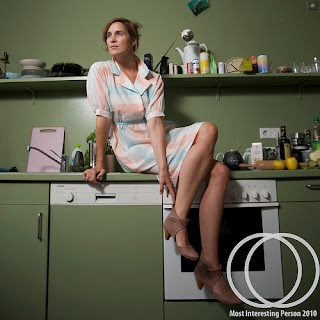
From Jetta Miller, the trail moves on to Rebecca Bach, video and performance artist. Bach chooses the Plänterwald as the environment in which to talk about her video project, "Wo sind Sie überhaupt?", an exploration of Berlin on foot along a single axis that cuts through the city. Bach's personal hero is Thorsten Schmitz, journalist for the Süddeutsche Zeitung. Schmitz talks quietly about reporting in conflict zones while he walks through the Pfaueninsel, a natural surrounding which, in his words, allows you to listen to silence and simply "be."
Schmitz's most interesting person is Edda Kruse Rosset, student, who talks to us from the place that is most significant for her: the "magic rooftops" above her house in Kreuzberg, one of the empty buildings that were occupied by squatters in the 1980s. Rosset points us to Beanne da Costa, also a student. Eighteen-year-old da Costa takes us through the park in Friedrichshain, and in the sun-dappled light slanting through trees, she shares with us her conviction of the power of music. In this delightful clip, she sings, narrates and dissolves into peals of laughter whenever she cannot take herself too seriously.
I asked Holt if the Berlin sequence was different from the others. Very much so, said Holt. The most interesting persons in London or Los Angeles, for instance, tended to be those who could further the careers of others. The choices of Berliners were more honest, varied and unpredictable. This city is a cultural ground zero, said Holt, which makes the Berlin stories that much richer.
Holt's sequences of three-minute-long portraits are spot on: a snapshot of Berlin 2010. Take a look at this "under the skin" perspective of the city on the Most Interesting Person website. And keep an eye open just in case this talented photographer/filmmaker happens to be following a trail in your city!
Each person he films sends him to somebody he or she finds most interesting, who then becomes the next stop on Holt's filmic journey. This domino reaction continues till, finally, Holt has created what he calls a trail -- a linked sequence of short films, featuring ordinary people who talk about their passions, convictions and personal heroes. Each "most interesting person" also chooses the location for the conversation. Long Trail Film Making, says Holt, is a great way to get "behind the skin" of a throbbing metropolis.
Stuart Holt started the project in London, continuing on to New York, Los Angeles, Sao Paulo and Tel Aviv. For the past year he has been in Berlin, and recently, he presented his series of short films in the Ballhaus Ost. The Berlin trails -- four in all -- are fascinating portraits of the people behind the creative energy of this city. Berlin's Trail Four, for instance, begins with Jetta Miller, film producer and director, who talks to Holt in her apartment in Berlin Mitte.

From Jetta Miller, the trail moves on to Rebecca Bach, video and performance artist. Bach chooses the Plänterwald as the environment in which to talk about her video project, "Wo sind Sie überhaupt?", an exploration of Berlin on foot along a single axis that cuts through the city. Bach's personal hero is Thorsten Schmitz, journalist for the Süddeutsche Zeitung. Schmitz talks quietly about reporting in conflict zones while he walks through the Pfaueninsel, a natural surrounding which, in his words, allows you to listen to silence and simply "be."
Schmitz's most interesting person is Edda Kruse Rosset, student, who talks to us from the place that is most significant for her: the "magic rooftops" above her house in Kreuzberg, one of the empty buildings that were occupied by squatters in the 1980s. Rosset points us to Beanne da Costa, also a student. Eighteen-year-old da Costa takes us through the park in Friedrichshain, and in the sun-dappled light slanting through trees, she shares with us her conviction of the power of music. In this delightful clip, she sings, narrates and dissolves into peals of laughter whenever she cannot take herself too seriously.
I asked Holt if the Berlin sequence was different from the others. Very much so, said Holt. The most interesting persons in London or Los Angeles, for instance, tended to be those who could further the careers of others. The choices of Berliners were more honest, varied and unpredictable. This city is a cultural ground zero, said Holt, which makes the Berlin stories that much richer.
Holt's sequences of three-minute-long portraits are spot on: a snapshot of Berlin 2010. Take a look at this "under the skin" perspective of the city on the Most Interesting Person website. And keep an eye open just in case this talented photographer/filmmaker happens to be following a trail in your city!
Nov 12, 2010
Discovery: Degenerate Art Under Rubble
They have spent more time under rubble than in a museum -- eleven sculptures that were confiscated as "degenerate art" from museums across Germany by the Nazi propaganda action.
The early-twentieth-century sculptures were part of a traveling exhibition of degenerate art in 1937, shown to the public as examples of art that disgraced the national spirit. They were returned to the Nazi Propaganda Ministry in 1941, then disappeared without a trace -- believed to be destroyed, sold or stolen.
"Small Miracle"
Berlin's mayor, Klaus Wowereit, called their discovery a "small miracle." Recently, construction work for the U5 subway line opposite Berlin's City Hall had turned up objects from the city's medieval past, including remnants of the original city hall from 1290. This brought archaeologists to the site.
To their surprise, they made an even bigger discovery: eleven delicate sculptures in bronze and terracotta, still bearing traces of fire bombing and destruction, buried deep within the rubble of a bombed-out cellar on Königstrasse 50.

The early-twentieth-century sculptures were part of a traveling exhibition of degenerate art in 1937, shown to the public as examples of art that disgraced the national spirit. They were returned to the Nazi Propaganda Ministry in 1941, then disappeared without a trace -- believed to be destroyed, sold or stolen.
"Small Miracle"
Berlin's mayor, Klaus Wowereit, called their discovery a "small miracle." Recently, construction work for the U5 subway line opposite Berlin's City Hall had turned up objects from the city's medieval past, including remnants of the original city hall from 1290. This brought archaeologists to the site.
To their surprise, they made an even bigger discovery: eleven delicate sculptures in bronze and terracotta, still bearing traces of fire bombing and destruction, buried deep within the rubble of a bombed-out cellar on Königstrasse 50.

Photo: Reuters

How Did They Get There?
Nobody knows for sure, but we do know that Königstrasse was located in a bustling city center in pre-war Berlin, and one of the offices in Number 50 belonged to a public accountant, Erhard Oewerdieck, and his wife Charlotte, who offered protection to Jewish intellectual friends during the Nazi persecution. They helped several flee the country, storing for them their collections of books and correspondence. Were these sculptures also part of a persecuted friend's collection?

Photo: AFP
Quiet Beauty in Terracotta
The fragment of the expressionist figure "Schwangere"("Pregnant Woman," 1918) by Emy Roeder is one of the most moving artworks recovered from the rubble. The figure is heart-rendingly fragile, the full lips and elongated cheekbones still bearing the blackened marks of fire destruction. But at the same time, we see strength and endurance in her downward gaze and the way she seems to concentrate on her inner self.
For Berlin's "small miracle" there could be no better exhibition space than Berlin's Neues Museum, itself a building that combines the enduring quality of architectural beauty with the deep scars of war and destruction.
Ten of the eleven sculptures are on display at the Neues Museum, located on the Museum Island, Bodestraße 3, 10178 Berlin. Public transportation options include: S-Bahn to Hackescher Markt, tram M4, M5, M6 to Hackescher Markt, Bus 100, 200 to Lustgarten.
The museum is open from 10:00 am to 6 pm, Monday to Wednesday, and 10 am to 8 pm, Thursday to Sunday. Admission is 10 EUR. Avoid queues by purchasing a"time-slot ticket" in advance.
Oct 30, 2010
Das Kochhaus: Tante Emma with a Twist
A new kind of grocery store opened last month in Berlin-Schöneberg -- a store that makes you feel you are walking into a Nigella Lawson cookbook.
That's exactly the experience that Ramin Goo, the under-30 founder of Das Kochhaus, wants you to have (except, perhaps, for the Nigella Lawson bit).
Guess Who's Making Dinner
Goo knows from personal experience the frustration of returning home from work (he was a management consultant at McKinsey) and trying to make an inspired menu from weary-looking veggies at the back of the fridge. Neither did he feel like trawling through supermarket aisles, filling a grocery cart with random items. People needed an alternative, he decided. And it wasn't take-out.
The joy of cooking at home, says Goo, begins with the pleasure of shopping for food. That's why his store is not organized according to categories of produce but instead visualizes the process of reading (and being inspired by) an illustrated cookbook.

Each week, Goo and his team create recipes that combine seasonal freshness, creativity and simple elegance. Then they stock the store for that week according to the recipes.


The store itself is laid out as a kind of dinner storyboard. You move from the appetizer tables to the salad variations, on to the entrees, and finally, the dessert. Recommended wines are on each table, as are kitchen tools called for by a specific recipe: a nutmeg grater here, a garlic press there. No detail has been overlooked.
A New Kind of Tante Emma
When Goo first broached the idea to investors, it was met with skepticism. A start-up project with fruits and vegetables instead of the internet? Not exactly cutting-edge.
But Goo's idea has caught on. While the average supermarket has about 15,000 items, Das Kochhaus has around 500. On the one hand, it is a throwback to the Tante Emma Laden of the 1970s (pre-supermarket), the little family-run shop where you could stock up on kitchen, pantry and domestic needs in one stop. On the other, Das Kochhaus fast-forwards Tante Emma into the twenty-first century.
Personally, I prefer the chaotic shopping you tend to do in the weekly farmers' markets (where you pick up two kilos of porcini mushrooms, then concoct recipes around the reckless purchase), and I warm to the kitchen that never runs out of cinnamon or turmeric rather than one that sports tidy packages of three red chillies, two stalks of parsley and one clove of garlic. But then, that's just me.
Das Kochhaus was bustling with customers yesterday. Couples stood in front of the tables, discussing dinner possibilities. Should it be the pasta with shiitake mushrooms and diced ham in a rosemary sauce this evening, or would they dare to try the lentil and lychee curry?
Goo's team, creators of the world's first walk-in cookbook, is already thinking of introducing cooking classes and expanding into other parts of Berlin and other cities in Germany.
For more information, photos, videos, press clippings (Das Kochhaus has extensive local, national and international press coverage) and the week's recipes, go to www.kochhaus.de. Recipe ingredients cost anywhere from 2,70 EUR per person to 9,50 EUR per person, and the package includes a recipe leaflet to take home.
Das Kochhaus is open Mondays to Fridays, from 10:00 am to 09:00 pm, and on Saturdays from 09:00 am to 08:00 pm. It is located at Akazienstrasse 1 in Berlin-Schöneberg, at the corner of Akazienstrasse and Hauptstrasse. The nearest U-Bahn station in U Eisenachstr. (U7). Buses M48 and M85 have stops right outside the entrance.
That's exactly the experience that Ramin Goo, the under-30 founder of Das Kochhaus, wants you to have (except, perhaps, for the Nigella Lawson bit).
Guess Who's Making Dinner
Goo knows from personal experience the frustration of returning home from work (he was a management consultant at McKinsey) and trying to make an inspired menu from weary-looking veggies at the back of the fridge. Neither did he feel like trawling through supermarket aisles, filling a grocery cart with random items. People needed an alternative, he decided. And it wasn't take-out.
The joy of cooking at home, says Goo, begins with the pleasure of shopping for food. That's why his store is not organized according to categories of produce but instead visualizes the process of reading (and being inspired by) an illustrated cookbook.

photo: courtesy, Das Kochhaus
Shopping by StoryboardsEach week, Goo and his team create recipes that combine seasonal freshness, creativity and simple elegance. Then they stock the store for that week according to the recipes.

photo: courtesy, Das Kochhaus
The aesthetic of the store is Zen-like. There are 20 tables and above each, a display poster in blackboard style, illustrating a recipe. The ingredients are on the table, carefully measured for two, four or six, arranged as beautifully and symmetrically as in a Japanese bento box.

photo: courtesy, Das Kochhaus
The store itself is laid out as a kind of dinner storyboard. You move from the appetizer tables to the salad variations, on to the entrees, and finally, the dessert. Recommended wines are on each table, as are kitchen tools called for by a specific recipe: a nutmeg grater here, a garlic press there. No detail has been overlooked.
A New Kind of Tante Emma
When Goo first broached the idea to investors, it was met with skepticism. A start-up project with fruits and vegetables instead of the internet? Not exactly cutting-edge.
But Goo's idea has caught on. While the average supermarket has about 15,000 items, Das Kochhaus has around 500. On the one hand, it is a throwback to the Tante Emma Laden of the 1970s (pre-supermarket), the little family-run shop where you could stock up on kitchen, pantry and domestic needs in one stop. On the other, Das Kochhaus fast-forwards Tante Emma into the twenty-first century.
Personally, I prefer the chaotic shopping you tend to do in the weekly farmers' markets (where you pick up two kilos of porcini mushrooms, then concoct recipes around the reckless purchase), and I warm to the kitchen that never runs out of cinnamon or turmeric rather than one that sports tidy packages of three red chillies, two stalks of parsley and one clove of garlic. But then, that's just me.
Das Kochhaus was bustling with customers yesterday. Couples stood in front of the tables, discussing dinner possibilities. Should it be the pasta with shiitake mushrooms and diced ham in a rosemary sauce this evening, or would they dare to try the lentil and lychee curry?
Goo's team, creators of the world's first walk-in cookbook, is already thinking of introducing cooking classes and expanding into other parts of Berlin and other cities in Germany.
For more information, photos, videos, press clippings (Das Kochhaus has extensive local, national and international press coverage) and the week's recipes, go to www.kochhaus.de. Recipe ingredients cost anywhere from 2,70 EUR per person to 9,50 EUR per person, and the package includes a recipe leaflet to take home.
Das Kochhaus is open Mondays to Fridays, from 10:00 am to 09:00 pm, and on Saturdays from 09:00 am to 08:00 pm. It is located at Akazienstrasse 1 in Berlin-Schöneberg, at the corner of Akazienstrasse and Hauptstrasse. The nearest U-Bahn station in U Eisenachstr. (U7). Buses M48 and M85 have stops right outside the entrance.
Oct 22, 2010
Bach in Schöneberg, Free Jazz in Friedrichshain
Piano City Berlin is on this weekend, a music festival that takes place in living rooms rather than in concert halls. The festival is an initiative of Radialsystem V, the cultural centre that calls itself "a new space for the arts in Berlin," and it invites listeners to piano concerts in private homes. The performers are not concert pianists. They just might be your neighbors.
It all began with a concert at the German-Finnish Society in Turku in southwestern Finland, in April 2009. After the concert, pianist Andreas Kern met up with three other guest performers in a cafe. They talked about the loneliness of the professional pianist. Unlike musicians in an ensemble or an orchestra, the pianist spends hours alone with his instrument. But what if you made the experience less solitary, if only for a day -- or a weekend?
There must be several hundreds of pianists in Berlin who had something to offer an audience, Kern thought -- students at the music conservatories such as the Hochschule für Musik Hanns Eisler or the Universität der Künste, those who taught music or played for pleasure. He was right. When he created a website inviting Berliners to send in videos of their performance and their reasons for wanting to be part of Piano City, he got hundreds of responses from professionals, amateurs, and shades of in-between -- Berliners from all walks of life, all ages, playing everything from classical to standard and free jazz to original compositions. They had one thing in common: they were passionate about the piano.

Piano City Berlin features 70 Berlin pianists and takes place on Saturday, October 23 and Sunday, October 24. Tickets (5.35 EUR) are available only at the festival website at www.pianocity-berlin.com
where you can also view videos of the pianists. The exact address is available only after you make the purchase (although the listing does specify the city district).
Piano City is followed by Musik in den Häusern der Stadt (Music in City Homes), which takes place all over Germany, from November 2 to 7, and features a range of instruments. There will be 19 concerts in Berlin. See www.kunstsalon.de for more information.
It all began with a concert at the German-Finnish Society in Turku in southwestern Finland, in April 2009. After the concert, pianist Andreas Kern met up with three other guest performers in a cafe. They talked about the loneliness of the professional pianist. Unlike musicians in an ensemble or an orchestra, the pianist spends hours alone with his instrument. But what if you made the experience less solitary, if only for a day -- or a weekend?
There must be several hundreds of pianists in Berlin who had something to offer an audience, Kern thought -- students at the music conservatories such as the Hochschule für Musik Hanns Eisler or the Universität der Künste, those who taught music or played for pleasure. He was right. When he created a website inviting Berliners to send in videos of their performance and their reasons for wanting to be part of Piano City, he got hundreds of responses from professionals, amateurs, and shades of in-between -- Berliners from all walks of life, all ages, playing everything from classical to standard and free jazz to original compositions. They had one thing in common: they were passionate about the piano.

photo: Kitty Kleist-Heinrich
Sophia Grevesmühl, music professional who studied at the Universität der Künste, was one of the first to send in her video to Kern's web site, and this weekend she will be performing Brahms in her Kreuzberg apartment, crammed with her favorite books and ficus house plants. Her sofa and kitchen chairs will be the "concert hall," and she plans to add a homey touch with tea and cookies. Sophia likes the idea of playing for people she has never seen before and being able to chat with them later. What brings them to my concert of all those featured in the program, she wants to know.
If you cringe at the thought of hearing one more amateur rendition of Bach's Prelude in C, this might not be for you. But if you like the idea of getting to know ordinary Berliners, some of whom have extraordinary talent, and traipsing through their living rooms (the smallest takes no more than eight guests) while listening to Prokofiev and free jazz, the weekend holds promise.
Piano City Berlin features 70 Berlin pianists and takes place on Saturday, October 23 and Sunday, October 24. Tickets (5.35 EUR) are available only at the festival website at www.pianocity-berlin.com
where you can also view videos of the pianists. The exact address is available only after you make the purchase (although the listing does specify the city district).
Piano City is followed by Musik in den Häusern der Stadt (Music in City Homes), which takes place all over Germany, from November 2 to 7, and features a range of instruments. There will be 19 concerts in Berlin. See www.kunstsalon.de for more information.
Oct 9, 2010
Art not just in Galleries
The Art Forum Berlin is on this weekend: the fifteenth edition of the international art show, featuring contemporary painting, sculpture, photography, video art and installations from 130 galleries from around the world. And, as so often in Berlin, the international event is accompanied by local satellite events. This weekend, there are at least three.
The Big Draw
The inspiration for the Big Draw festival comes from the Campaign for Drawing, a charity organization in England, whose ambition is to get people to lose their inhibitions about picking up a drawing pencil and to use it as a tool for thought, creativity and social engagement.
 The first Big Draw in Berlin was held in 2009, during the Long Night of the Museums. This year, festival director Anna Chrusciel has gone a step further, transforming more public spaces into art studios for all -- including the Deutsche Bank's atrium off Unter den Linden and the Grüner Salon at Rosa-Luxemberg Platz. Berliners of all ages can be seen in galleries, cafes, U-Bahn stations, even the Botanical Gardens, recklessly wielding sketching pencils, felt pens, highlighter markers, post-it notes, clay, scissors and glue.
 Artists lead workshops where you can experiment with working on an animated film, comic strip or poster ad. Fun!
A Taste of Grunge
The Big Draw
The inspiration for the Big Draw festival comes from the Campaign for Drawing, a charity organization in England, whose ambition is to get people to lose their inhibitions about picking up a drawing pencil and to use it as a tool for thought, creativity and social engagement.
Artists lead workshops where you can experiment with working on an animated film, comic strip or poster ad. Fun!A Taste of Grunge
The Score .03 urban art fair is on all weekend, next to the U-Bahn Gleisdreieck. Its profile piqued my curiosity -- a combination of live painting, street art and graffiti. Berlin has some great street art, if you know where to look for it -- or know people who do -- (my best guides have been a couple of intrepid freshmen students), but this festival tries too hard to be edgy to be genuinely interesting. Not recommended if you don't lean toward techno music and grunge appeal.
Art in the Hangars
Preview Berlin, an exhibition of works from 60 galleries in 19 countries, takes place in the light-filled, freshly painted Hangar 2 of Tempelhof Airport. Use of this space to showcase young gallery-owners without large-scale resources -- including several from eastern and central Europe -- and artists not yet established in the art world is a stroke of genius.
All three events are on till 10 October 2010. For more information, see:
www.thebigdrawberlin.de
www.stroke03.com
www.previewberlin.de
Art in the Hangars
Preview Berlin, an exhibition of works from 60 galleries in 19 countries, takes place in the light-filled, freshly painted Hangar 2 of Tempelhof Airport. Use of this space to showcase young gallery-owners without large-scale resources -- including several from eastern and central Europe -- and artists not yet established in the art world is a stroke of genius.
All three events are on till 10 October 2010. For more information, see:
www.thebigdrawberlin.de
www.stroke03.com
www.previewberlin.de
Oct 4, 2010
Figaro is Moving In
Yesterday, after almost two years of renovation, and an investment of 23 million Euros, the newly refurbished Schiller Theater opened its doors as interim housing for the Staatsoper, Berlin's State Opera House on Unter den Linden. There is a sweet ironic twist to the turn of events.
Last Night at the Schiller
The Schiller Theater had been the leading light among West Berlin theaters in the 1950s and 60s. Samuel Beckett himself directed a production of Waiting for Godot here in 1975. But after reunification in 1989, Berlin ended up with more cultural institutions than any other German city, and state funds could not support them all. Two theaters from former east Berlin, the Deutsches Theater and the Volksbühne, made the final cut, but the Schiller Theater had to go.
Berliners still remember the firestorm of protest, the demonstrations, the historic Long Night of the Artists -- a final defiant marathon performance lasting through the night -- and then, the closing in late September 1993.

Now, exactly 17 years later, and in time for the 20th anniversary of German Unification, a newly gleaming Schiller Theater reopens in the west, and the famous opera house from former east Berlin moves in. The Staatsoper, undergoing a major three-year renovation, is using the Schiller Theater as its temporary home till 2013. Daniel Barenboim, its music director, called it the reunification made complete.
Figaro is Moving In
Figaro is Moving In is the name of a special guided tour offered by the Schiller Theater during the season's opening days. It takes visitors not only through the building but also to production cast members as they get ready for a performance. Tickets for the tour sold out almost immediately, but although you may have missed it, you can still take the regular guided tour, which offers fascinating glimpses of the restoration work required to make a 1950s theater for dramatic productions suitable for a twenty-first century opera house.
The 1950s design elements are still there: wall frescoes, copper embellishments, Murano-glass ceiling lights, iridiscent mosaic in the foyer's front window. The old 1950s cafeteria lies untouched and even the pastel tones of carpets have been retained. But layers of black paint have been stripped from the walls facing the stage, exposing original warm maple wood panels, front row seats have been ripped out to carve out space for an orchestra pit that can take 120 musicians, and engineers have doubled the resonance in the hall (from 0.9 to almost 2.0 seconds). Take the tour to find out more!
Sleepless in Charlottenburg
There is also a series of night tours that takes place after a performance, and a late-night music and literary series (accompanied by champagne) in the foyer called "Sleepless in Charlottenburg". You don't have to be an opera buff to enjoy the Schiller Theater this season.
For more information, dates and times of the tours, go to the Staatsoper in the Schiller Theater website.
Tours cost 5 EUR (regular price). Tours are in German only.
The Sleepless in Charlottenburg series starts in November and begins at 10:30 pm. Tickets are 15 EUR (regular price).
The Schiller Theater is at Bismarckstrasse 110, 10625 Berlin. The nearest subway is U Ernst-Reuter Platz.
Last Night at the Schiller
The Schiller Theater had been the leading light among West Berlin theaters in the 1950s and 60s. Samuel Beckett himself directed a production of Waiting for Godot here in 1975. But after reunification in 1989, Berlin ended up with more cultural institutions than any other German city, and state funds could not support them all. Two theaters from former east Berlin, the Deutsches Theater and the Volksbühne, made the final cut, but the Schiller Theater had to go.
Berliners still remember the firestorm of protest, the demonstrations, the historic Long Night of the Artists -- a final defiant marathon performance lasting through the night -- and then, the closing in late September 1993.

photo: dpa
Now, exactly 17 years later, and in time for the 20th anniversary of German Unification, a newly gleaming Schiller Theater reopens in the west, and the famous opera house from former east Berlin moves in. The Staatsoper, undergoing a major three-year renovation, is using the Schiller Theater as its temporary home till 2013. Daniel Barenboim, its music director, called it the reunification made complete.
Figaro is Moving In
Figaro is Moving In is the name of a special guided tour offered by the Schiller Theater during the season's opening days. It takes visitors not only through the building but also to production cast members as they get ready for a performance. Tickets for the tour sold out almost immediately, but although you may have missed it, you can still take the regular guided tour, which offers fascinating glimpses of the restoration work required to make a 1950s theater for dramatic productions suitable for a twenty-first century opera house.
The 1950s design elements are still there: wall frescoes, copper embellishments, Murano-glass ceiling lights, iridiscent mosaic in the foyer's front window. The old 1950s cafeteria lies untouched and even the pastel tones of carpets have been retained. But layers of black paint have been stripped from the walls facing the stage, exposing original warm maple wood panels, front row seats have been ripped out to carve out space for an orchestra pit that can take 120 musicians, and engineers have doubled the resonance in the hall (from 0.9 to almost 2.0 seconds). Take the tour to find out more!
Sleepless in Charlottenburg
There is also a series of night tours that takes place after a performance, and a late-night music and literary series (accompanied by champagne) in the foyer called "Sleepless in Charlottenburg". You don't have to be an opera buff to enjoy the Schiller Theater this season.
For more information, dates and times of the tours, go to the Staatsoper in the Schiller Theater website.
Tours cost 5 EUR (regular price). Tours are in German only.
The Sleepless in Charlottenburg series starts in November and begins at 10:30 pm. Tickets are 15 EUR (regular price).
The Schiller Theater is at Bismarckstrasse 110, 10625 Berlin. The nearest subway is U Ernst-Reuter Platz.
Sep 10, 2010
Bauhaus by Bike
You've seen them often: Berlin tourists-on-bikes pedalling determinedly across Potsdamer Platz, sailing down Unter den Linden or whizzing along the East Side Gallery. But, far from the madding crowd, is a 90-minute bike tour with a difference.
This is the tour I mentioned in my last blog, and it's one that fewer tourists discover. The combined bike/audio guide tour starts from the Haus am Waldsee, then traces a path through the leafy villa colony of Zehlendorf, taking you past 12 private homes designed by Bauhaus artists Walter Gropius, Ludwig Mies van der Rohe and Hermann Muthesius.

The route loops around the beautiful Schlachtensee lake, and the concentration of 1920s Bauhaus homes in this residential neighborhood makes it unique in all of Germany. Some have the romantic charm of English country homes; others have the strict functional lines we associate with purist Bauhaus.
The tour was designed by Katja Blomberg, curator of the Haus am Waldsee, who was inspired by a walking/audio guide tour through a residential neighborhood in Chicago, studded with homes designed by Frank Lloyd Wright. Blomberg liked the unpretentious tone of the Chicago audio guide and decided that was exactly what she needed for her Zehlendorf Bauhaus tour. The research and commentary were prepared with the help of students from the Universität der Künste.
An ideal combination of city biking, nature, history and architecture. Nothing spells "Serene Weekend" quite like it.
The Haus am Waldsee is at Argentinsiche Allee 30 (U3 to Krumme Lanke). You can either bring your own bike or rent one at the museum. Rentals are daily from 11 am to 4 pm and cost 5 EUR for two hours. The audio guide is available only in German.
This is the tour I mentioned in my last blog, and it's one that fewer tourists discover. The combined bike/audio guide tour starts from the Haus am Waldsee, then traces a path through the leafy villa colony of Zehlendorf, taking you past 12 private homes designed by Bauhaus artists Walter Gropius, Ludwig Mies van der Rohe and Hermann Muthesius.

photo: Viola F. Ording
The route loops around the beautiful Schlachtensee lake, and the concentration of 1920s Bauhaus homes in this residential neighborhood makes it unique in all of Germany. Some have the romantic charm of English country homes; others have the strict functional lines we associate with purist Bauhaus.
The tour was designed by Katja Blomberg, curator of the Haus am Waldsee, who was inspired by a walking/audio guide tour through a residential neighborhood in Chicago, studded with homes designed by Frank Lloyd Wright. Blomberg liked the unpretentious tone of the Chicago audio guide and decided that was exactly what she needed for her Zehlendorf Bauhaus tour. The research and commentary were prepared with the help of students from the Universität der Künste.
An ideal combination of city biking, nature, history and architecture. Nothing spells "Serene Weekend" quite like it.
The Haus am Waldsee is at Argentinsiche Allee 30 (U3 to Krumme Lanke). You can either bring your own bike or rent one at the museum. Rentals are daily from 11 am to 4 pm and cost 5 EUR for two hours. The audio guide is available only in German.
Sep 3, 2010
Listen to the Water Grass: Berlin's Haus am Waldsee
At the Haus am Waldsee, you never quite know which of the natural and man-made objects in the garden are actually the work of an artist's imagination. Take for instance the reeds and rushes at the water's edge. When their stalks rustle in the breeze, the whispering sound in the stillness is like the opening bars of a piece of music. Nature's magnum opus? Not quite. The tall grasses were planted by Austrian composer, Peter Ablinger, one of the international artists this museum has featured.
The Haus am Waldsee has been one of my most treasured finds this season. Like many Berliners, I had completely overlooked the 1920s grey villa while biking past it numerous times in hot summers, headed toward the Schlachtensee for a dip in the lake.
Far from the star attractions in the Museumsinsel in Berlin Mitte or the Kulturforum at Potsdamer Platz, the Haus am Waldsee basks in quiet seclusion at the edge of the Grunewald forest, waiting to be discovered.
Originally a private villa, the museum was one of the first to exhibit "degenerate art" after the collapse of the Third Reich. One of its earliest exhibitions (in 1946, when Berlin was still in ruins) was dedicated to the work of Käthe Kollwitz. Around that time, the first performance of the Berlin Philharmonic after the war's end took place here. Today, the Haus am Waldsee is a premier exhibition space for international contemporary artists, designers, musicians and writers.

When I visited yesterday, the museum was getting ready for the next exhibition beginning September 10, so there were no visitors -- a perfect opportunity to have the idyllic sculpture garden behind the villa all to myself. The garden is a 10.000 square-meter tree-shaded park that meanders to the Waldsee lake shore.
One of the coolest exhibits in the sculpture garden is the LoftCube. The vision of Berlin-based designer Werner Aisslinger, the Loftcube is the prototype of a "flying building," which can be lowered by helicopter on to tall building rooftops. If Berlin were to one day look like Tokyo, this would be ideal for urban nomads with a passion for minimalism.
I tried to imagine moving in to the LoftCube in the sculpture garden of the Haus am Waldsee -- surrounded by oaks and pines, looking out at the lake, the whispering reeds for company. Sort of like living in a designer treehouse. Not bad on a sun-dappled September day.


The Haus am Waldsee has been one of my most treasured finds this season. Like many Berliners, I had completely overlooked the 1920s grey villa while biking past it numerous times in hot summers, headed toward the Schlachtensee for a dip in the lake.
Far from the star attractions in the Museumsinsel in Berlin Mitte or the Kulturforum at Potsdamer Platz, the Haus am Waldsee basks in quiet seclusion at the edge of the Grunewald forest, waiting to be discovered.
Originally a private villa, the museum was one of the first to exhibit "degenerate art" after the collapse of the Third Reich. One of its earliest exhibitions (in 1946, when Berlin was still in ruins) was dedicated to the work of Käthe Kollwitz. Around that time, the first performance of the Berlin Philharmonic after the war's end took place here. Today, the Haus am Waldsee is a premier exhibition space for international contemporary artists, designers, musicians and writers.

photo copyright: Pablo Sanz Almoguera
When I visited yesterday, the museum was getting ready for the next exhibition beginning September 10, so there were no visitors -- a perfect opportunity to have the idyllic sculpture garden behind the villa all to myself. The garden is a 10.000 square-meter tree-shaded park that meanders to the Waldsee lake shore.
One of the coolest exhibits in the sculpture garden is the LoftCube. The vision of Berlin-based designer Werner Aisslinger, the Loftcube is the prototype of a "flying building," which can be lowered by helicopter on to tall building rooftops. If Berlin were to one day look like Tokyo, this would be ideal for urban nomads with a passion for minimalism.
I tried to imagine moving in to the LoftCube in the sculpture garden of the Haus am Waldsee -- surrounded by oaks and pines, looking out at the lake, the whispering reeds for company. Sort of like living in a designer treehouse. Not bad on a sun-dappled September day.

photo copyright: Pablo Sanz Almoguera

photo copyright: Pablo Sanz Almoguera
Stay tuned for my next post on an architectural bike tour you can plan, starting from the Haus am Waldsee.
The Haus am Waldsee is at Argentinische Allee 30, 14163 Berlin. Take U3 to Krumme Lanke, walk south on Argentinische Allee, about 5 minutes. Open, Tuesday to Sunday, 11:00-18:00, Wednesday from 11:00-20:00. Closed on Monday. Entrance to the exhibition is 5 EUR. You don't have to be an art-lover to enjoy the cafe's outdoor seating in the sculpture garden -- it's absolutely delightful.
Aug 25, 2010
Hidden Beauty: Nature Park in Schöneberg
My last blog mentioned a nature park in the Schöneberg district, and I promised to tell you why it is one of Berlin's hidden gems. The Natur-Park Schöneberger Südgelände will not show up in a Lonely Planet guide or a travel site's Top Ten Berlin attractions, but this woodland area in an uncompromisingly urban landscape -- a former railway switchyard -- is pure magic.
Nothing prepares you for the 18-hectare expanse of wilderness at the southern end of the Priesterweg S-Bahn station. Neither "preserved" nor landscaped, the park evolved when nature stepped in and took the upper hand.
Steel Rails
Native flora and fauna were wiped out when construction of the Tempelhof railway switchyard began in the 1890s. Over the next decades, this became one of Berlin's busiest rail hubs and, by the time of the Second World War, a crucial center for transporting war materials. By the late 1940s, the outcome of the war (and later, the Berlin blockade) made the switchyard obsolete. Rail operations finally ground to a halt in 1952. The area became a ghost installation, steel tracks cutting through the land, going nowhere.
Berlin Biotope
Then, silently, Nature reasserted itself. A natural forest grew up, undisturbed by men and machines. Native birch and lime trees, common oaks and Norway maples put down roots between the tracks. Fruit trees marched across the desolate space, and wild roses sprawled across rusting rails. Dry meadows burst into bloom with evening primrose, white wild carrots and sickleweed. Nightingales, robins and blackcaps moved back into their terrain, as did wild bees, crickets and blue-winged grasshoppers. A perfect, miniature biotope flourished in what was once the busiest railway site in Berlin.


Nothing prepares you for the 18-hectare expanse of wilderness at the southern end of the Priesterweg S-Bahn station. Neither "preserved" nor landscaped, the park evolved when nature stepped in and took the upper hand.
Steel Rails
Native flora and fauna were wiped out when construction of the Tempelhof railway switchyard began in the 1890s. Over the next decades, this became one of Berlin's busiest rail hubs and, by the time of the Second World War, a crucial center for transporting war materials. By the late 1940s, the outcome of the war (and later, the Berlin blockade) made the switchyard obsolete. Rail operations finally ground to a halt in 1952. The area became a ghost installation, steel tracks cutting through the land, going nowhere.
Berlin Biotope
Then, silently, Nature reasserted itself. A natural forest grew up, undisturbed by men and machines. Native birch and lime trees, common oaks and Norway maples put down roots between the tracks. Fruit trees marched across the desolate space, and wild roses sprawled across rusting rails. Dry meadows burst into bloom with evening primrose, white wild carrots and sickleweed. Nightingales, robins and blackcaps moved back into their terrain, as did wild bees, crickets and blue-winged grasshoppers. A perfect, miniature biotope flourished in what was once the busiest railway site in Berlin.

photo: Holger Koppatsch

photo: Holger Koppatsch
Railway Tracks through the Wilderness
A steam engine, now surrounded by birch trees, stands witness to the park's history as does the original 1927 water tower. The longest route through the park is 2.7 kms., and when I take it, I feel like a child exploring a secret garden. Don't miss out on walking along a 600 m. long steel-mesh platform raised above the original track bed. Nature lovers find themselves following a path through the wilderness once taken by the steam railways that supplanted it. The experience is unique.
The Nature Park Schönegerger Südgelände was first opened to the public in 2000, generously funded by the Allianz Environmental Foundation, and was declared a Global Project of EXPO 2000. The main entrance to the park is at the southern exit of the Priesterweg S-Bahn station, which you can reach on lines S2 and S25. Opening hours are from 9 a.m. till nightfall. Admission is 1 EUR. Open all year round, and beautiful in any season. Highly recommended: a visit in Fall.
Aug 12, 2010
Concerts in the Park
August is the best month for concerts in the park. The sweltering heat of July is over, the last weeks of vacation are still on, and there are at least four weeks to go before theaters and concert halls open again for the new season. Outdoor summer performances remind us that Berlin is gritty but green.
Since I was away on vacation, I missed a large part of the Wassermusik 2010 Festival at the Haus der Kulturen der Welt, but I am still in time for the Parks in Concert series (20-29 August), including open-air performances in the Botanische Garten, Schloss Charlottenburg, Britzer Garten, Kulturbrauerei and Schloss Köpenick.
My tip for August-October is the Acoustic Concerts Berlin, a small, unplugged summer concert series that showcases local talent. Concerts are held in intimate settings: this year, the Alte Bahnhofshalle Friedenau, the beautifully restored, historic railway station at S-Bahnhof Friedenau (dating back to 1874), and the Natur-Park Schöneberger Südgelände, one of Berlin's most unique (but still relatively little-known) nature parks.
I only discovered the park this spring, after having lived just three stops away for many years. It has a fantastic history, so I'll save it for my next post.
Tomorrow (August 13, at 19:30) San Francisco- born Shannon Callahan will be performing at the nature park with her band (guitar/vocals/bass/drums). Callahan has a background in opera and musical theater, but the music she records and performs now is purely acoustic: a mix of folk, pop, country and soul.

Whether or not you make it to the concert tomorrow evening, stay tuned for more on the nature park Schöneberger Südgelände in my next blog to find out why it is one of Berlin's hidden gems.
Since I was away on vacation, I missed a large part of the Wassermusik 2010 Festival at the Haus der Kulturen der Welt, but I am still in time for the Parks in Concert series (20-29 August), including open-air performances in the Botanische Garten, Schloss Charlottenburg, Britzer Garten, Kulturbrauerei and Schloss Köpenick.
My tip for August-October is the Acoustic Concerts Berlin, a small, unplugged summer concert series that showcases local talent. Concerts are held in intimate settings: this year, the Alte Bahnhofshalle Friedenau, the beautifully restored, historic railway station at S-Bahnhof Friedenau (dating back to 1874), and the Natur-Park Schöneberger Südgelände, one of Berlin's most unique (but still relatively little-known) nature parks.
I only discovered the park this spring, after having lived just three stops away for many years. It has a fantastic history, so I'll save it for my next post.
Tomorrow (August 13, at 19:30) San Francisco- born Shannon Callahan will be performing at the nature park with her band (guitar/vocals/bass/drums). Callahan has a background in opera and musical theater, but the music she records and performs now is purely acoustic: a mix of folk, pop, country and soul.

Whether or not you make it to the concert tomorrow evening, stay tuned for more on the nature park Schöneberger Südgelände in my next blog to find out why it is one of Berlin's hidden gems.
Subscribe to:
Posts (Atom)


 Posts
Posts